Knowledge · Fatigue
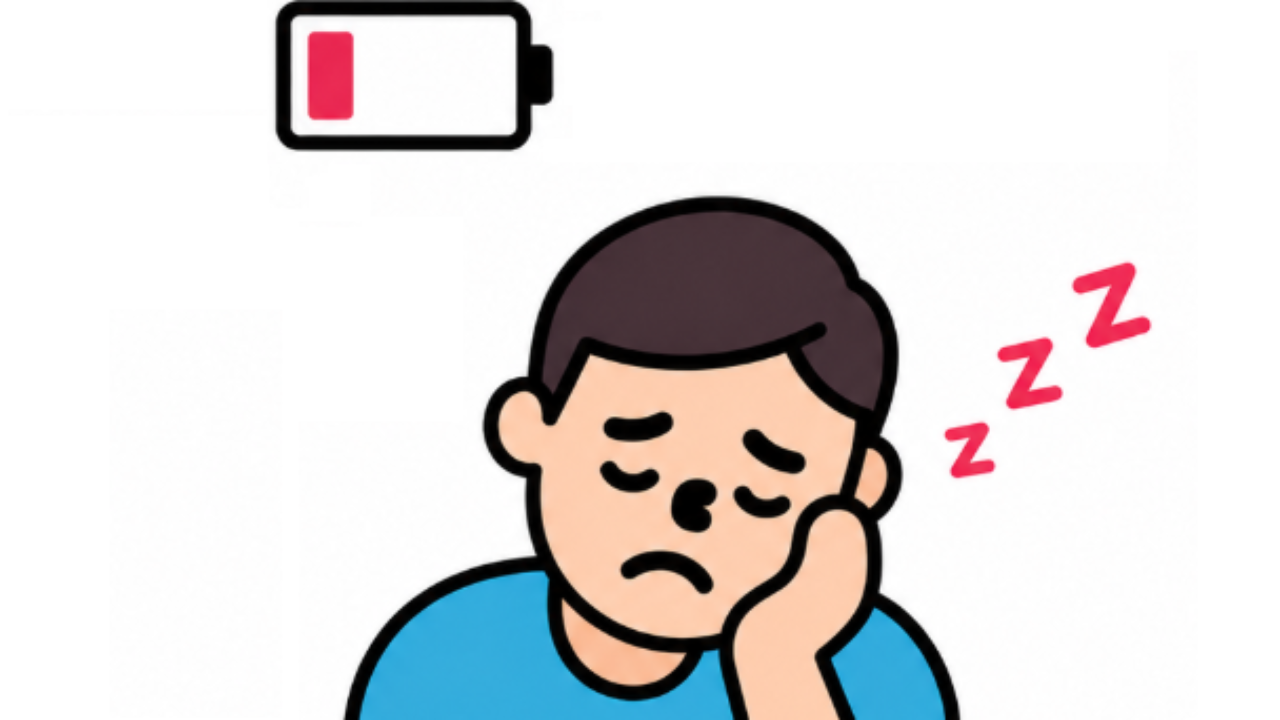
Fatigue isn’t weakness. It’s what happens when your brain has to think about everything.
Before my stroke, I never thought about how much effort it took to move. Now, even simple things can leave me completely exhausted. Sometimes I’ve barely done anything, but I still feel like I’ve run a marathon.
Before my stroke, I never thought about how much effort it took to move.
I’d get out of bed, walk to the kitchen, grab a cup, go up the stairs. I just did it. I didn’t have to think about where to put my foot or how to move my arm. My body knew what to do.
Now, some days, even getting up and walking across the room can feel like a proper job.
And the frustrating part? Sometimes I’ve barely done anything, but I’m still completely exhausted.
I can sleep all night and wake up feeling like I haven’t rested at all.
That’s when I started realising that this isn’t just normal tiredness.
My brain has to think about things it never used to think about
After my stroke, moving wasn’t always impossible. Sometimes I could still do the movement, but it didn’t feel natural anymore.
I had to think about it.
Where does my foot go? How do I lift my leg? How do I get my arm to move without my shoulder taking over?
Before, my brain handled all of that without me even noticing.
Now, I sometimes feel like I’m having to do manually what my brain used to do automatically.
And that takes a lot out of me.
It’s like trying to do something simple while also having to remember ten other things at the same time. Even if the movement looks small from the outside, I know how much work is going on inside.
The ways I compensate can make things even harder
When something doesn’t move properly, I find ways around it.
I might lean my body to help my leg move. I might lift my shoulder to get my arm up. I might stand differently because it feels safer or easier.
And honestly, sometimes those workarounds are what let me get through the day.
But they also cost me.
I’m using extra muscles, and I’m thinking about every part of the movement. Instead of just moving, I’m concentrating on how to move.
So I’m doing more work than I used to, even when the movement itself looks pretty basic.
Sometimes I’m not tired because I’ve done loads. I’m tired because everything takes more effort than it used to.
What I’ve had to learn about training
For a long time, I thought that if I wanted to get better, I just had to push harder.
More repetitions. Longer sessions. Keep going even when I was tired.
But I’ve started to understand that pushing through everything isn’t always the answer.
Here’s what makes more sense to me now:
- I pay attention to what my fatigue is telling me. If a movement takes loads of concentration, that’s something worth noticing. It doesn’t mean I’m weak. It means my brain and body are working hard.
- I try to stop before my movement falls apart. If I’m getting sloppy, leaning more, or using other parts of my body to get through the exercise, I need a break.
- I’d rather do ten good repetitions than fifty rubbish ones. I’m not trying to win a competition with myself. I’m trying to teach my body how to move better. And sometimes that means doing less, but doing it properly.
- I also have to look at how I feel the next day. Sometimes I feel okay during a session, but the following day I’m absolutely wiped out. That tells me something.
Maybe I did too much. Maybe I needed a longer break. Maybe the session was harder than I realised.
I’m learning that recovery is part of the training too.
The thing I’m really working towards
I don’t just want to be able to move.
I want movement to feel easier again.
I want to be able to walk without thinking about every single step. I want to reach for something without planning the whole movement in my head.
I want some of that automatic feeling back.
Because when a movement starts becoming more natural, it doesn’t take the same amount of concentration. I’m not using all my energy just to make it happen.
And hopefully, that means I’m not as exhausted afterwards.
For me, real progress isn’t just doing more. It’s being able to do something without it taking everything out of me.
I’m still recovering. Some days are better than others. Some days I feel like I’m getting somewhere, and other days I feel like I’ve gone backwards.
But I’m learning that fatigue doesn’t mean I’ve failed.
It means I need to listen to my body, give my brain a chance to recover, and focus on doing things well instead of just doing more.
I don’t have to exhaust myself to prove I’m working hard.
Sometimes the smartest thing I can do is stop, rest, and come back ready to try again.
One thing I’m learning: Real progress isn’t just about doing more. It’s about making movement easier, using less energy, and giving my brain time to recover.